
COMPOSITE MATERIAL STACK DEFINITION & PROCESS
OPTIMIZATION FOR AUTOMOTIVE & IMPACT PROTECTION APPLICATIONS
//DuPont de Nemours Int. S.A.
CASE STUDY
-
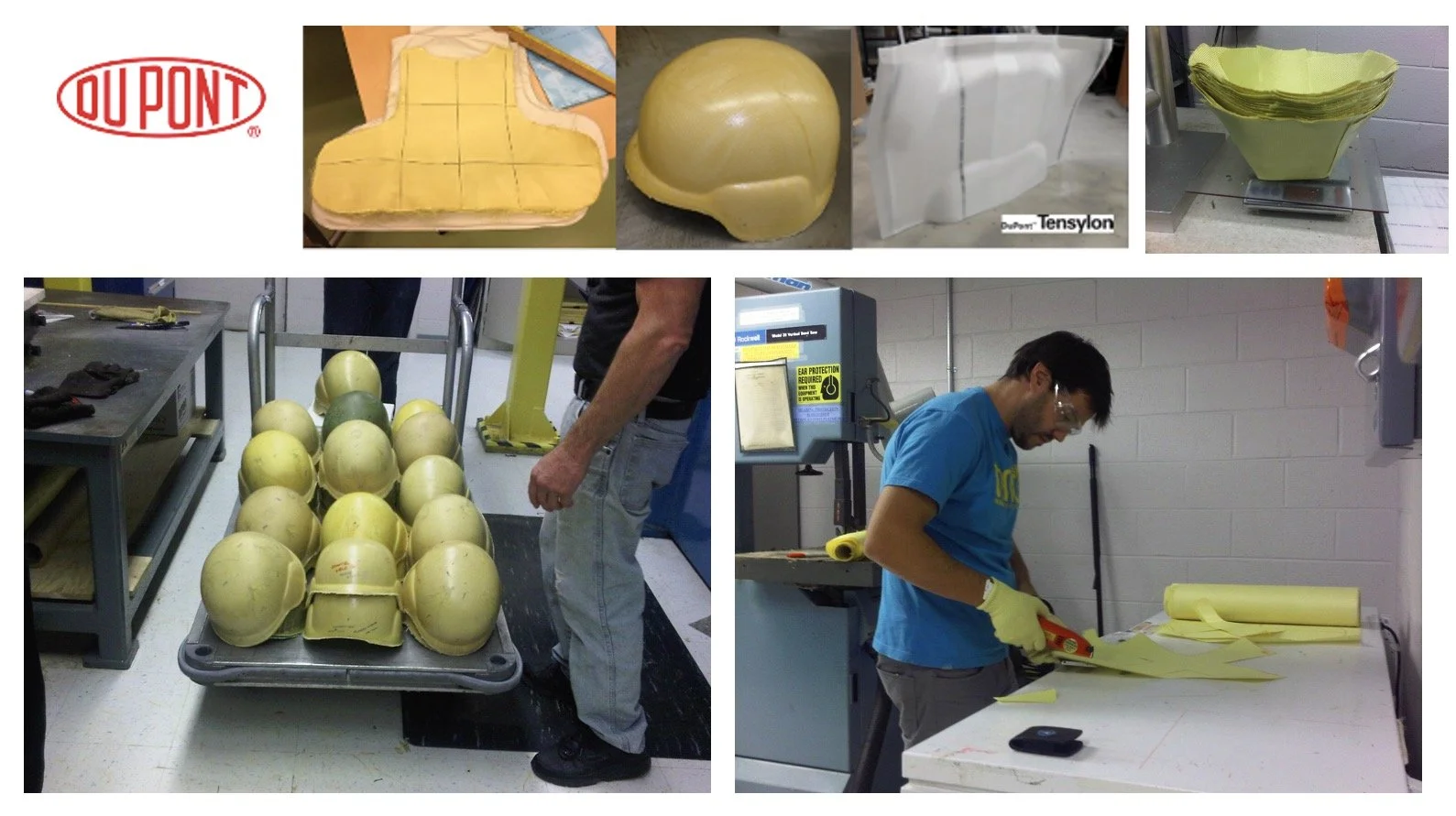
DuPont sought to define the optimal resin–fabric configuration, composite material composition, and specific transformation process for manufacturing Kevlar® helmets, UHMWPE hoods, and textile ballistic vests, ensuring high impact resistance and optimal weight-to-performance ratios for automotive and protective uses.
-
Specific composite configurations—including yarn and fabric type, resin, number of layers, and orientations—were defined using analytical models developed in-house. Based on this framework, the manufacturing process and initial trials were carried out, followed by optimization steps enabling prototype validation through mechanical and functional testing.
-
The project produced three prototypes with optimized weight-to-performance ratios for their intended applications, supported by official certifications based on mechanical testing. Technical positioning of the developed solutions wasstrengthened through an internal benchmarking campaign comparing performance against competing materials.